

The complete guide
Buying Guide
Why start with RO/DI water?
Tap water is treated for people to drink. It can still carry minerals and other dissolved material that matter in an aquarium. In a reef tank, those extras can feed algae and make the water harder to keep steady. That is why many reef keepers mix their salt and top off with RO/DI water.
Keepers of planted tanks and soft water fish often do the same. They start with clean water and add back only what their tank needs.
How this system works
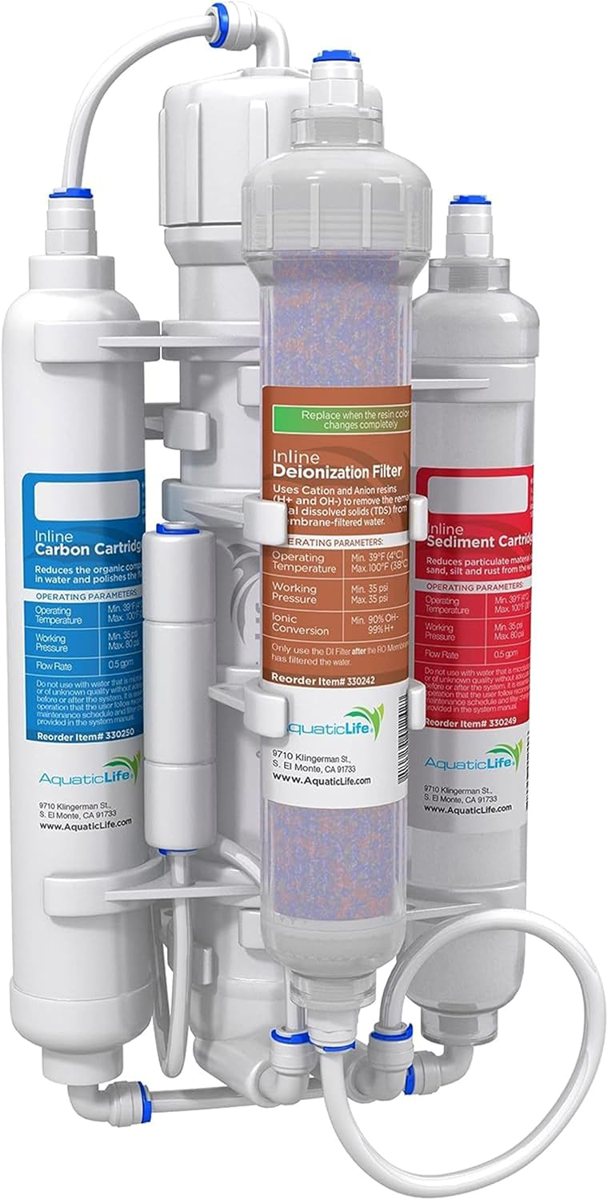
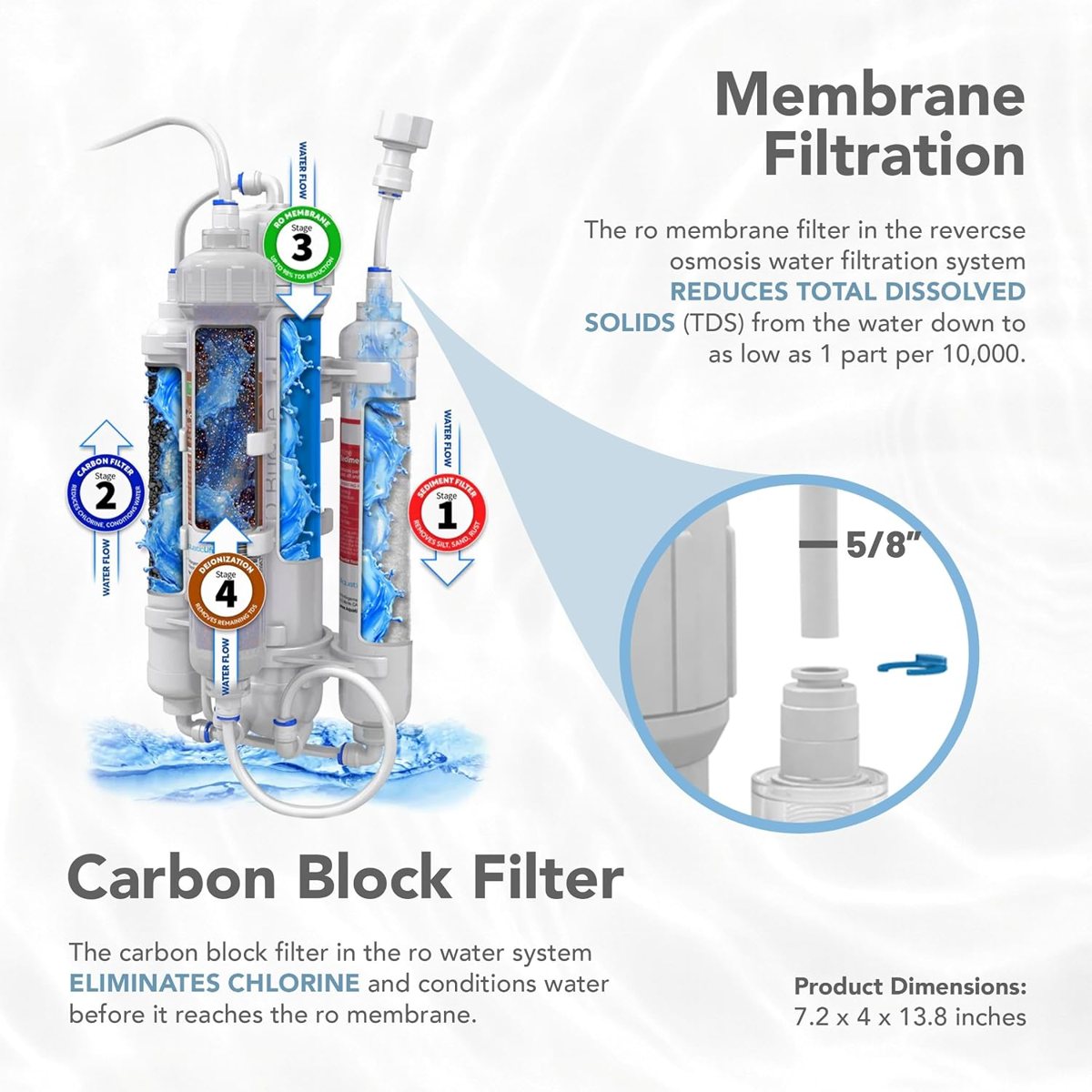
Water passes through four stages:
- Sediment filter. Catches particles like sand and rust.
- Carbon block. Sits before the membrane and helps protect it.
- RO membrane. Pushes water through a very fine membrane, leaving most dissolved material behind.
- Mixed-bed DI resin. A final polish after the membrane.
The DI resin changes colour as it gets used up. When you see the change, it is time for fresh resin.
How much water?
It makes up to 50 gallons a day. Real output depends on your water pressure and temperature. Cold water and low pressure mean less water.
Setting it up
The system connects to a cold water supply. A laundry tub or the space under a sink are common spots. Follow the fittings and steps in the instructions.
Two things to plan for:
- Waste water. RO systems send part of the water to drain as they work. Run the waste line to a drain, or collect it in a bucket for the garden.
- Storage. Keep your RO/DI water in a clean, covered, food-safe container.
Flush a new system before you use any water in your tank.
Checking your water
A TDS meter is a cheap and simple way to check the water coming out. Test it now and then, and especially after changing a filter stage.
Beyond the aquarium
The same water is handy for tabletop fountains and humidifiers.
Looking after it
- Watch the DI resin colour
- Replace the sediment and carbon stages as the instructions advise
- Use cold water only
- Keep the system out of direct sun and away from freezing
The short version
A 4-stage RO/DI filter that makes up to 50 gallons a day for top-off and salt mixing. The colour-changing DI resin shows you when it needs replacing. Plan for the waste line, store the water clean, and test it now and then.