
The complete guide
Choosing a Stainless Steel Litter Box, A Practical Buyer's Guide
The problem nobody warns you about
You buy a plastic litter tray. For the first month it is fine. Then you notice that even after you have emptied it, washed it and dried it, there is still a faint smell when you walk past. You wash it again. The smell is still there.
That is not your imagination and it is not your cleaning. It is the plastic. Every scoop you take scratches the surface a little, and those scratches are deep enough to hold urine but too fine to clean out. Over time the tray becomes a sponge. The only real fix is to throw it away and buy another one, which is what most people end up doing once or twice a year.
A stainless steel litter box removes that cycle. There is no porous surface, so there is nothing for odour to settle into. When you wash it, it is actually clean. That is the whole pitch, and for a lot of households it is enough on its own.
How a metal tray is different
The practical differences show up in small ways.
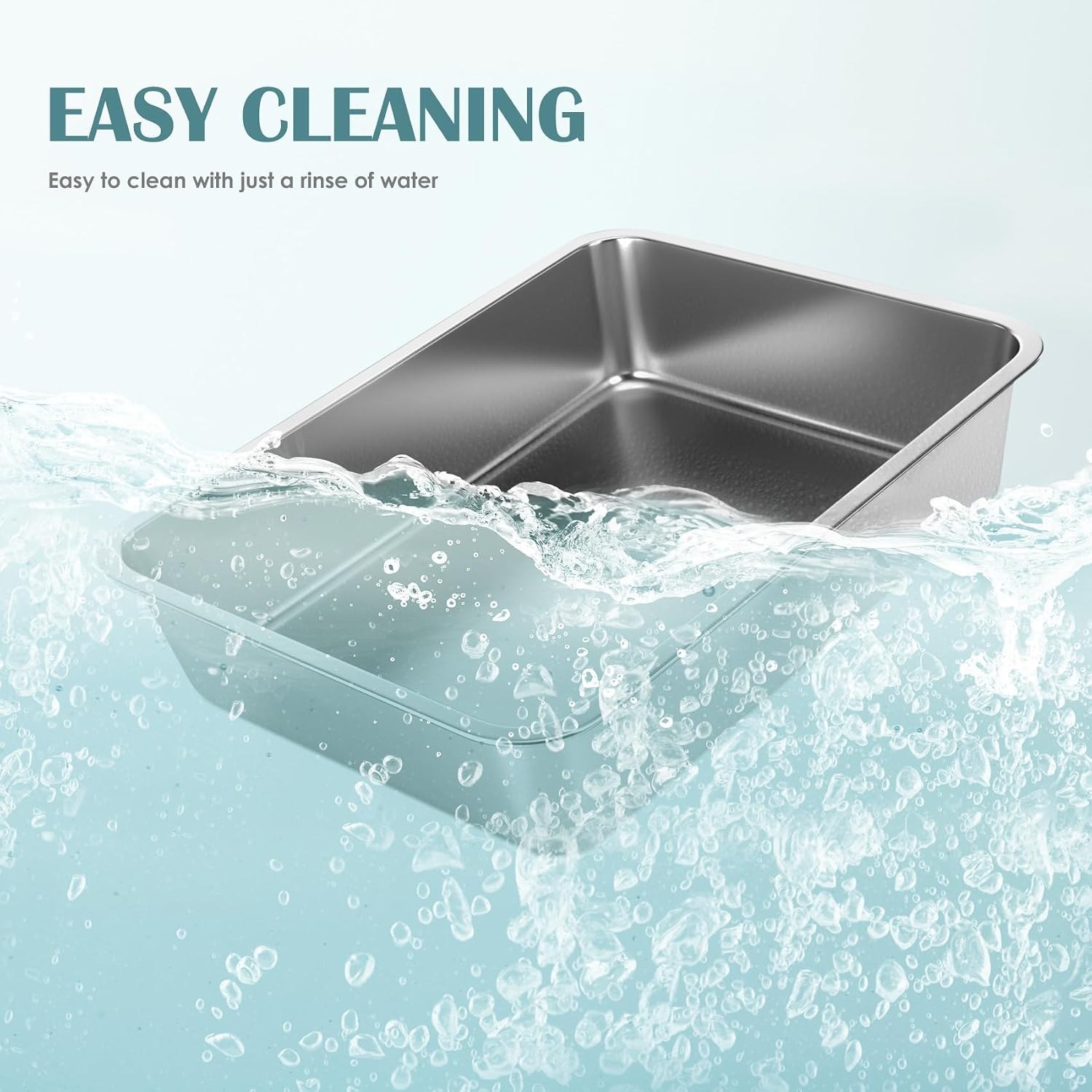
Waste and clumped litter slide off smooth metal rather than sticking. If you have ever chipped dried clumps out of the corner of a plastic tray with a scoop, you will notice the change immediately. Scooping becomes faster and the weekly deep clean takes a couple of minutes instead of ten.
Metal also does not stain. Plastic picks up a yellow tint around the base that no amount of scrubbing removes. Stainless steel keeps looking the same.
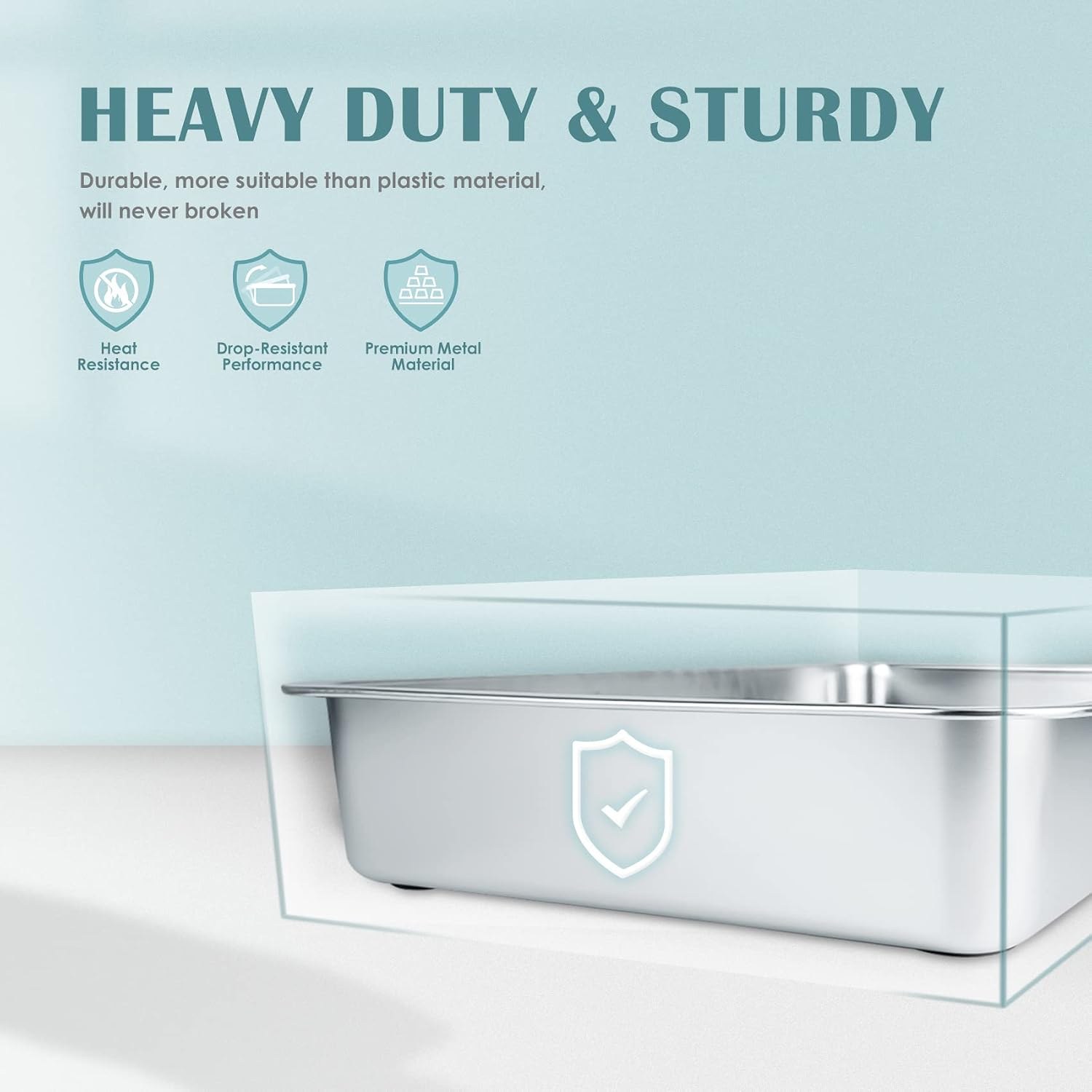
Then there is durability. Plastic trays crack at the corners, particularly in cold rooms or if someone stands on one. A metal pan is far less likely to. The trays weigh about 1 kg empty, which is light enough to carry easily but solid enough that it does not flex when you lift it full.
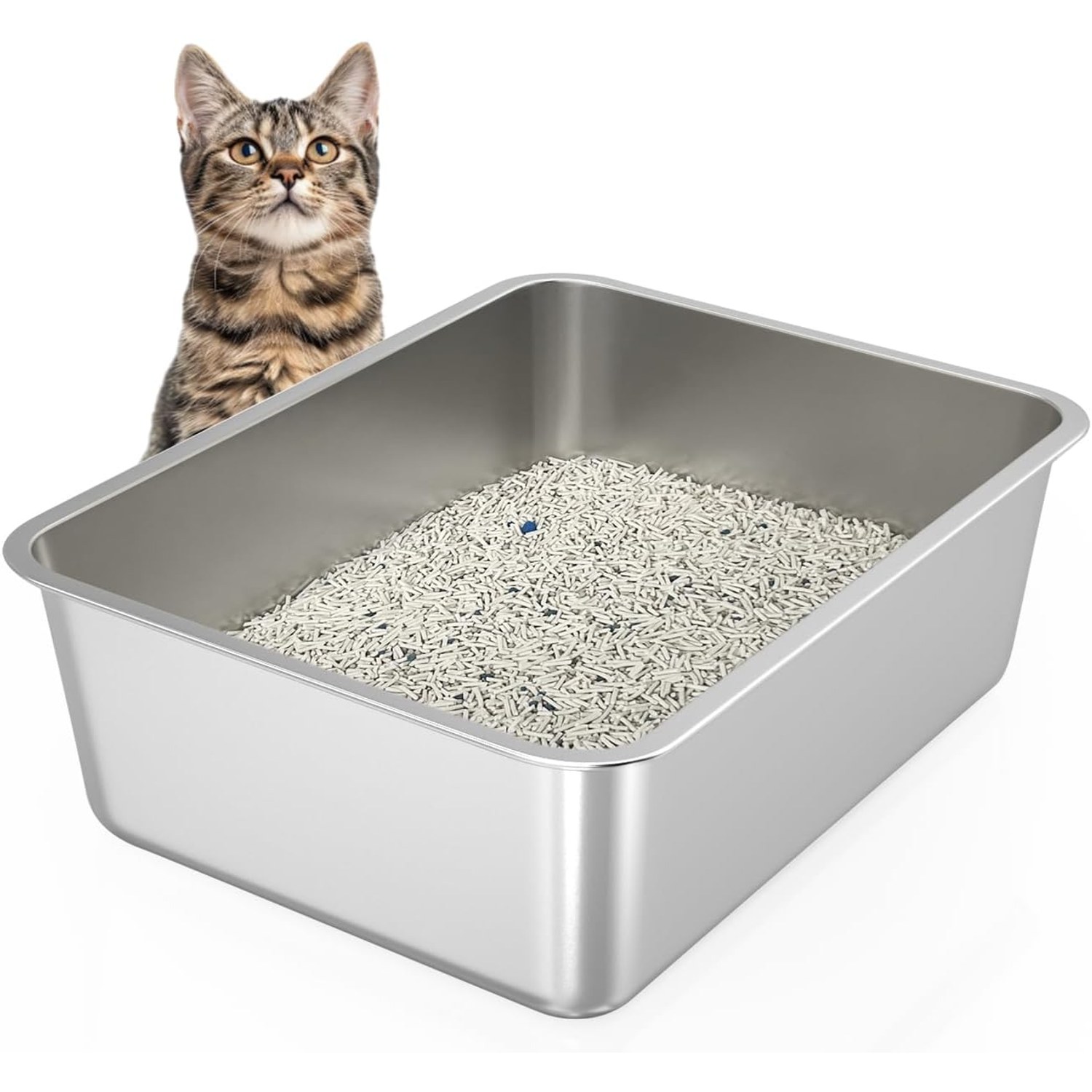
The one thing people ask about is sharp edges, and it is a fair question. This tray is made with rounded corners and no sharp edges, so you can grip the rim with both hands and tip it out without wincing. Each corner of the base also has a rubber padded foot. Those do two jobs. They stop the pan sliding across tiles when your cat gets enthusiastic with digging, and they keep the metal base off your timber or vinyl so it cannot leave scratch marks.
Who this particular tray suits
Size is the part to get right, and it is worth being honest about it.
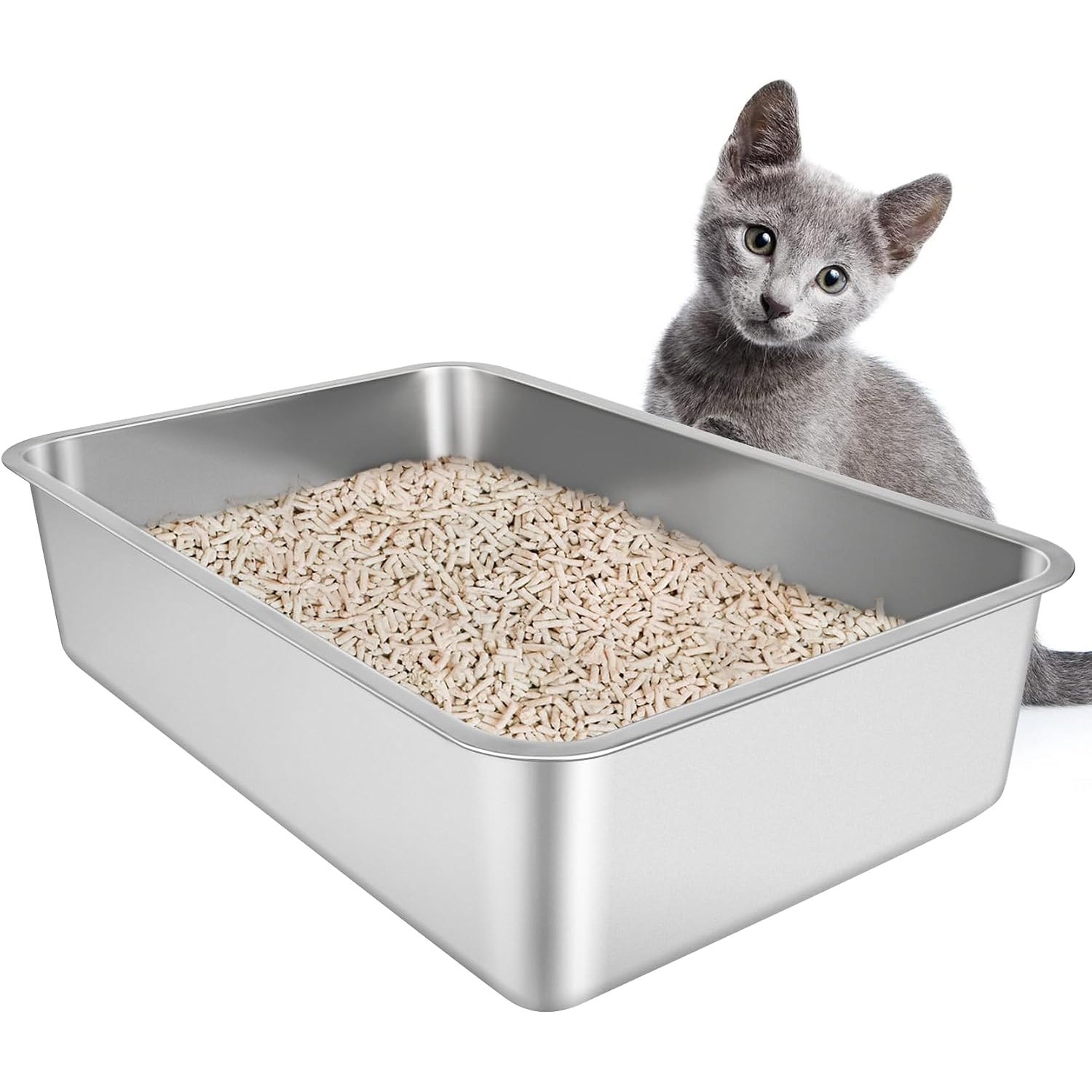
This pan comes in two sizes: 45 x 35 x 15 cm, with sides high enough to keep a digger's litter in, and 50 x 35 x 10 cm, longer and lower for an easy step-in. The general guideline vets give is that a litter box should be at least as long as your cat from nose to the base of the tail, and ideally about one and a half times that length. Run the numbers and the 45 cm tray fits most adult cats, while the 50 cm tray gives a long-bodied cat a little more room.
So it works well for:
- Kittens learning to use a tray, where the low wall on the 50 x 35 x 10 cm tray means they can step in without a struggle
- Small adult cats who do not need a huge footprint
- Rabbits, who take to open trays and tend to chew plastic
- Hamsters, guinea pigs and similar small pets that need a digging pan or corner tray
- Senior cats with stiff joints, as long as the floor area suits their body length
A large or long-bodied cat wants the 50 cm tray. If your cat measures longer than about 35 cm nose to tail base, size up. A cramped box is one of the most common reasons cats start going outside the tray, and it is an easy mistake to avoid.
How to choose between litter box styles
There are three main decisions, and size is only one of them.
Open or covered. Covered boxes contain litter scatter and hide the view, which owners like. Plenty of cats do not. An enclosed box traps smell inside where the cat has to sit in it, and it gives them only one exit, which some cats find stressful. If your cat already uses an open tray happily, there is no reason to change. This is an open design, so it suits that preference.
Wall height. High sides keep litter in when your cat is a determined digger. Low sides make entry easy. The 50 x 35 cm tray takes the low entry route at 10 cm, which is the right call for kittens, rabbits and older cats; the 45 x 35 cm tray has 15 cm sides for the kickers. Either way, keep the litter depth around 5 to 8 cm and sit the tray on a mat.
Material. Plastic is cheap and light. Metal costs more upfront and lasts far longer, with better odour behaviour. If you are tired of replacing trays, the best rust-resistant litter tray is usually the metal one, simply because you buy it once.
Setting it up well
Where you put the tray matters nearly as much as the tray itself.
Pick somewhere quiet with a clear line of sight and more than one way out. Avoid laundries and garages where a machine might start up and startle your cat mid-use. Keep it well away from food and water bowls, because cats instinctively separate the two.
If you have more than one cat, the standard advice is one tray per cat plus one extra, spread across different rooms. Two cats, three trays. It sounds excessive until you have dealt with a territorial dispute over a single box.
When you introduce a new pan, do not swap the old one out overnight. Put them side by side for a week with the same litter in both. Cats accept change better when it feels like their decision. Once you see consistent use, take the old one away.
Keeping it clean
This is the easy part, which is rather the point.
Scoop solids every day. It takes thirty seconds and it is the single biggest factor in whether your house smells. Once or twice a week, tip the whole lot out and wash the pan with warm water and a little mild dish soap. Rinse it well and dry it with a cloth. Drying matters mainly for appearance, since standing water leaves spots on metal, but it also means you can refill straight away.
Skip the steel wool and the gritty scouring powders. They will dull the finish over time and there is no need, since nothing bakes on to a smooth metal surface anyway. If you want a deeper clean now and then, diluted white vinegar works fine. Avoid bleach and anything ammonia based near litter residue.
You do not need liners. Liners exist mainly to protect plastic from staining, and that is not a problem here. Most cats shred them anyway.
A few honest limitations
No product is right for everyone, so here is the balance.
Pick the size by your cat, not by the price: a cramped tray is the commonest reason a cat goes elsewhere. The low-walled size is great for access and less great for enthusiastic diggers, so a litter mat underneath is a sensible add-on there. There is no lid, so if you specifically want a hooded box to hide the tray from view, this is not that.
The short version
If you are replacing plastic trays every few months because they have started to smell, a stainless steel litter box solves that properly. Nothing absorbs or stains. Cleaning becomes a two minute job.
This pan comes in 45 x 35 x 15 cm and 50 x 35 x 10 cm, so there is a size for a kitten and a size for a big cat. Rubber padded feet keep it still and protect your floors. Rounded corners mean you can carry it full without hurting your hands.
Measure your cat first. If the numbers work, this is a tray you buy once and stop thinking about.